Example workflow Specialty Retail

How a Wine Shop Can Build Supplier Orders by Scanning the Shelf

Scan the bottle, type how many you want, move on. The order arrives at your supplier as a file of exact barcodes and quantities instead of a phone call full of vintages and bottle sizes.

This page shows how DataScan can be set up for this task. It is an illustration, not a report about a specific customer. All codes and values on it are examples.

7-Day Free Trial • iPhone, iPad & Android • Cancel Anytime
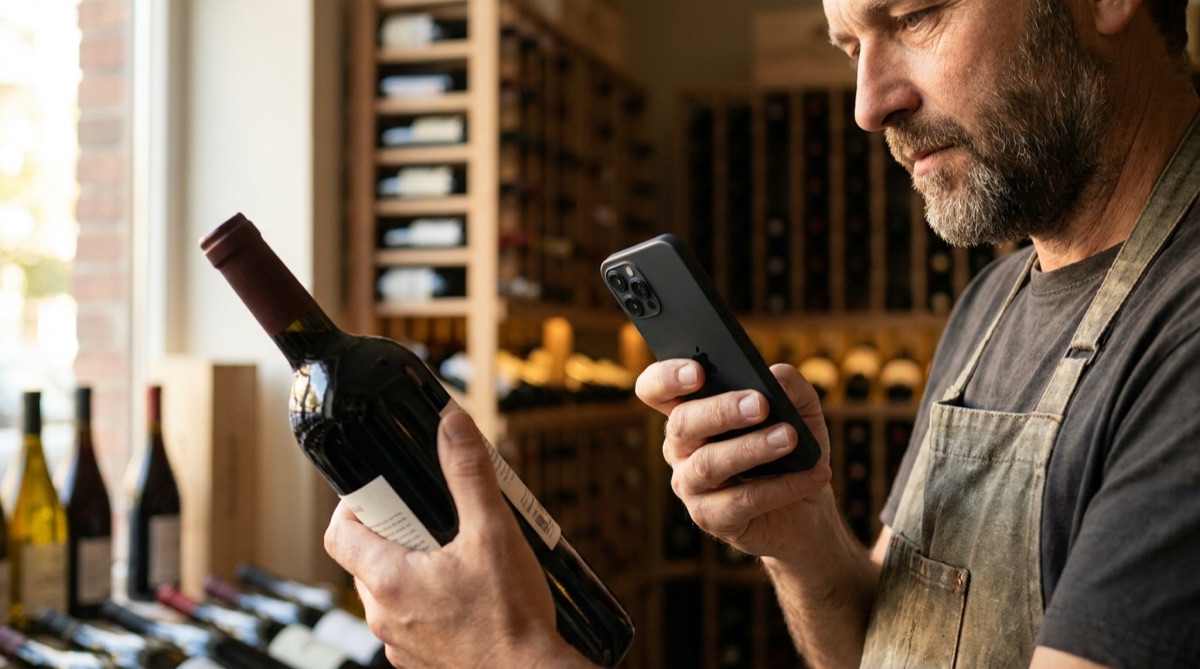
Wine shop owner scanning bottle barcode to create supplier order

The problem

Ordering specialty products by phone or in a typed email invites mistakes. A wine with the same name comes in several vintages and bottle sizes, a cheese in two ripening stages, an olive oil in three tins. Reading names off a handwritten note leaves the supplier to guess which one you meant.

The barcode on the product already identifies the exact item. If you capture that barcode with the quantity you want while standing at the shelf, nobody has to retype or interpret anything.

What you need is a list of barcode and order quantity that you can send straight from the shop floor, in a format your supplier can open.

The setup

Single Value Scan records each barcode with a typed quantity. Preset the email so sending the order takes a tap.

Scan mode Single Value Scan
Quantity Input Label Order Qty
Barcode and Quantity Column Header EAN and Order Qty, or the names your supplier asks for
To Email (SMTP) or Default Recipient (Mail app) Your supplier's order address
Subject and signature Subject such as "Order, customer no. 10442"; signature with your shop name, address and customer number
Optional lookup The supplier's article list as CSV (EAN first, product name second), with Enable Cross-Reference on, so the product name is shown after each scan
Export format Excel (.xls) or CSV, whichever your supplier prefers

Step by step

  1. Walk the shelves Open Single Value Scan and go through the shop and the storeroom. For each product that needs restocking, scan the barcode and type the quantity you want to order.
  2. Check the product name If you imported the supplier's article list, the product name is shown after each scan, so you can confirm the vintage or size before you move on.
  3. Review the list Open the scan list and look through it. A wrong line is removed with a swipe and scanned again with the right quantity.
  4. Send the order Tap Send Email. Through your own mail server (SMTP), the order goes out to your supplier's order address at once; with the Mail app, a filled-in draft opens and you tap Send. The subject and signature tell the supplier who is ordering.
  5. Keep the sent email The sent email with its attachment is your copy of the order. Start a new scan for the next order round.

What you get out

Each scanned product becomes one row. A short order looks like this:

Column Example value What it holds
EAN 3760123450019 The barcode of the exact product, including vintage and size
Order Qty 12.0 The quantity you typed
Timestamp 2026-04-03 10:05 When the line was scanned

With "Cross-reference with Lookup Data" on, the columns of the supplier's article list, such as product name and article number, are added after these, which makes the file easier for the supplier to read.

Fits well if…

  • Your products carry barcodes that your supplier recognises.
  • You reorder by walking the shelves rather than from a stock system.
  • Your supplier accepts orders by email as a spreadsheet or CSV file.
  • You order from one main supplier who receives the file by email.

Send Your Next Order as a Scan

Scan a few products, send the file to yourself and see what your supplier would receive. The free trial includes every feature.

7-Day Free Trial • iPhone, iPad & Android • Cancel Anytime