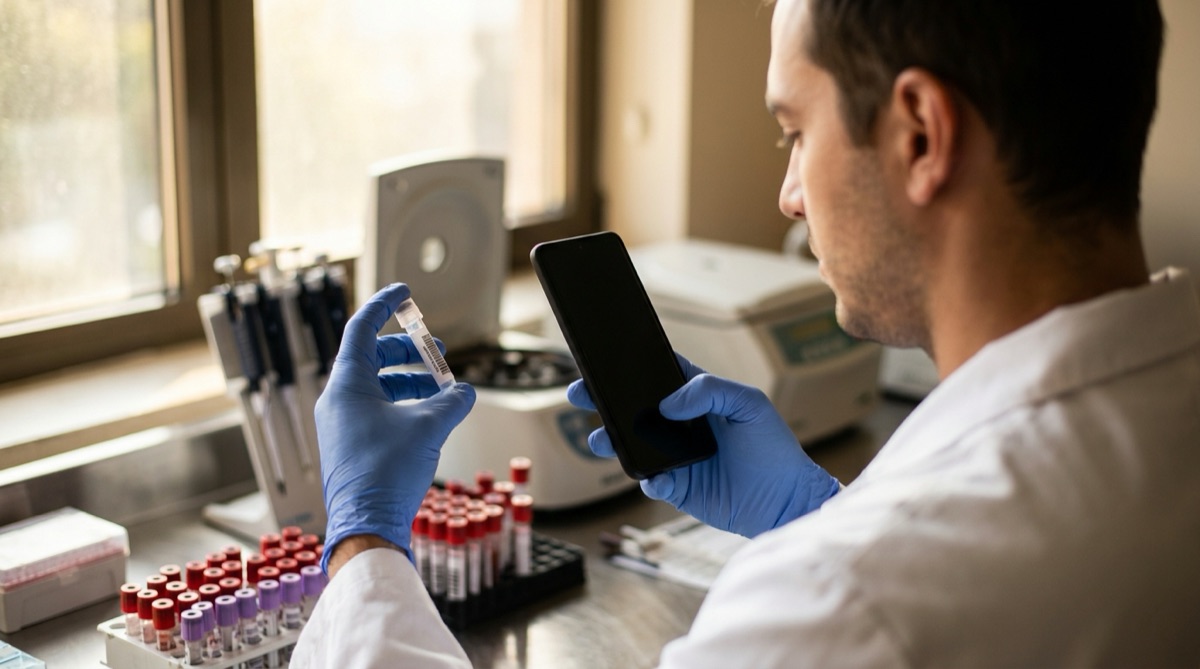
Laboratory sample tracking requires perfect accuracy under time pressure. You receive 50 samples from a clinical trial. Each sample needs a unique ID, documentation of who collected it, when, and from which subject. The samples split into multiple aliquots for different tests. Each aliquot needs tracking through storage, testing, and disposal. Track this on paper lab notebooks and you're risking transcription errors, lost documentation, and catastrophic sample mix-ups that invalidate months of work.
Chain of custody requirements are strict for good reason. You must document every time a sample is handled: who accessed it, when, why, and what was done. Paper-based chain of custody forms get separated from samples. Someone forgets to sign the form. The timestamp is illegible. The sample location isn't recorded. When an auditor asks to see the complete chain of custody for Sample X, you're piecing together information from lab notebooks, sign-out sheets, and people's memories. The documentation is incomplete and the audit findings are negative.
Sample mix-ups are every lab's nightmare. Two samples with similar IDs sit next to each other. A researcher grabs the wrong one. Or labels a tube incorrectly. Or transposes digits while manually recording a sample ID. The error isn't discovered until results don't make sense - if it's discovered at all. In clinical or forensic labs, sample mix-ups can have catastrophic consequences: wrong diagnoses, invalidated legal evidence, months of research wasted. But preventing mix-ups with manual tracking is nearly impossible when handling hundreds of samples.
Batch processing creates documentation nightmares. You run 96 samples through an assay. Each sample needs its result recorded and linked back to the original sample ID. With manual transcription, you're writing 96 sample IDs and 96 results, hoping you don't transpose any digits or skip any rows. The process takes 30-45 minutes and errors are common. Later, someone needs to trace results back to original subjects - requiring you to search through notebooks matching sample IDs to subject IDs to results. The process is slow, error-prone, and auditors hate it.