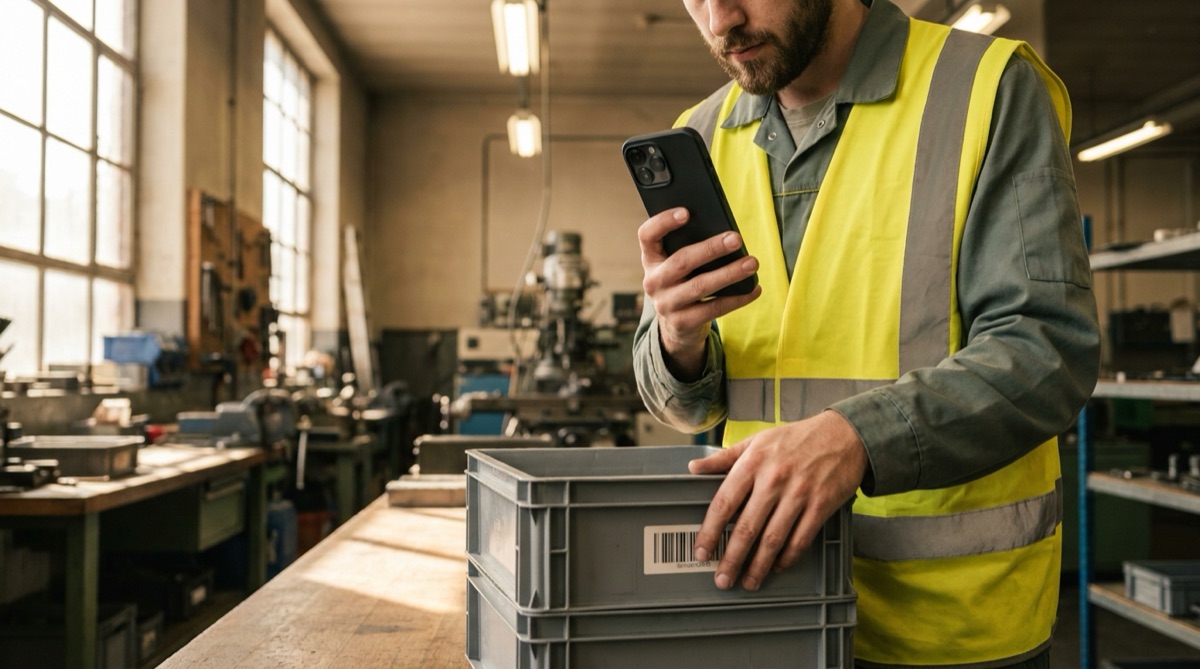
Walk into any production facility and you'll find the same problem: bins and bins of similar-looking parts that are definitely not interchangeable. A bearing that looks identical to another might have different load ratings. A fastener that appears the same might have different thread pitch. Small parts that look alike might have different material compositions that matter for specific applications.
Workers waste massive amounts of time trying to identify parts correctly. They squint at tiny part numbers stamped on components. They reference outdated printed catalogs. They walk back and forth to the parts room to double-check specifications. They interrupt experienced workers to ask "is this the right part?" Production stops while someone figures out if they grabbed the correct component.
The consequences of grabbing the wrong part are expensive. Best case: someone catches the mistake and production stops while the correct part is located. Worst case: the wrong part gets installed, fails in the field, and you're dealing with warranty claims and damaged reputation. Even experienced workers make mistakes when parts look similar and bins aren't clearly labeled.
Inventory counts are slow and error-prone. Workers manually count each bin, write down part numbers, and hope they didn't transpose any digits. The process takes hours or days depending on your parts count. By the time you finish, the inventory data is already out of date. Meanwhile, you're either overstocked on some parts (tying up cash) or running out of critical components (stopping production).