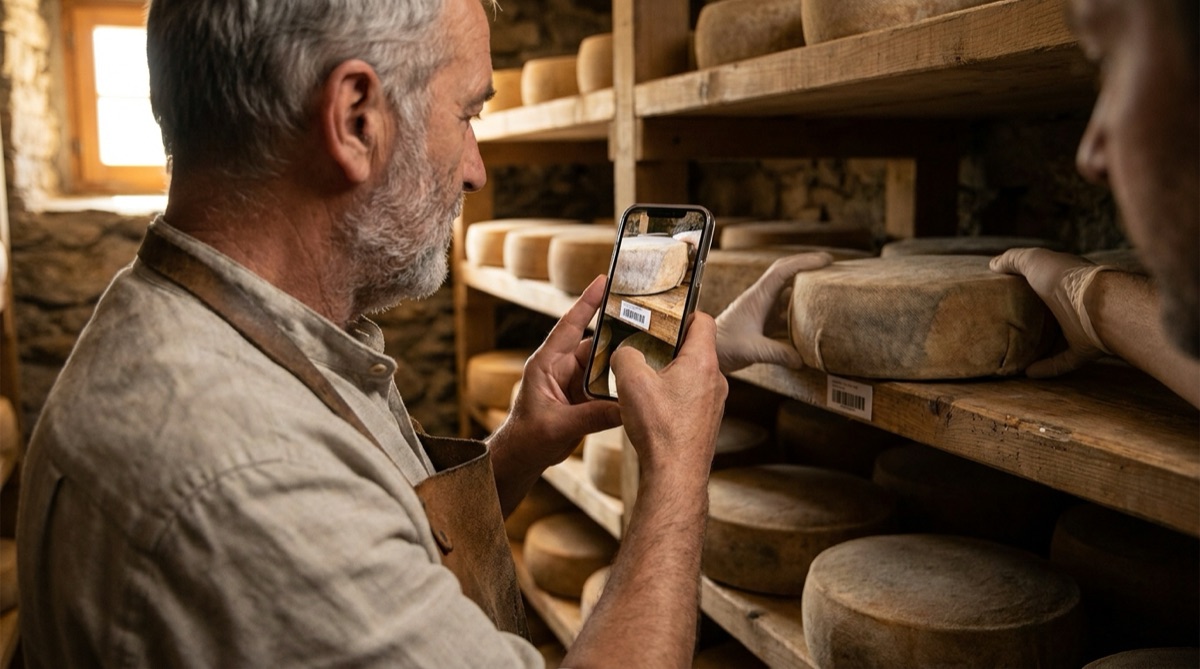
Artisan cheese doesn't sit still while it ages. Wheels start in a high-humidity ripening section, move to a drier zone after the rind sets, and often move again for final affinage. A creamery with a few hundred wheels across multiple cave sections is running a small warehouse — except the inventory is alive, the moves happen weekly, and the rooms are cold, damp, and often without cell signal.
Paper records fail exactly where cheese is made. Clipboards hung on racks soak up cave moisture. Workers with wet hands abbreviate notes that nobody can read three months later. 'Moved 8/15' — which wheels? To which section? When a move involves forty wheels shifting from Section B to Section D, writing down every wheel number by hand takes longer than the move itself, so it simply doesn't happen.
The result is that nobody can answer two basic questions quickly: 'Where is batch 2024-087 right now?' and 'What exactly is sitting in Section D?' Finding a specific batch means walking the caves and reading labels. Harvest planning means trusting memory. And when a milk-quality issue means you must locate every wheel from one production week, the search takes hours.
Food safety regulations make this more than an inconvenience. Traceability rules require you to know where product from any production date is located — quickly. If your location records live on moisture-damaged clipboards and in the heads of experienced staff, a routine audit or a recall inquiry turns into days of reconstruction work.